

In early August, AFEW International welcomed a delegation of Georgian LGBTQI+ civil society representatives to Amsterdam for a week of policy dialogue, international exchange and learning during WorldPride Amsterdam 2026.
A central part of the programme was the High-Level Policy Dialogue on 5 August, which brought Georgian civil society representatives together with European and international partners. The meeting provided an opportunity to discuss the increasingly challenging environment for civil society in Georgia, share first-hand experience from organisations working with LGBTQI+ communities, and identify priorities for international cooperation and support.
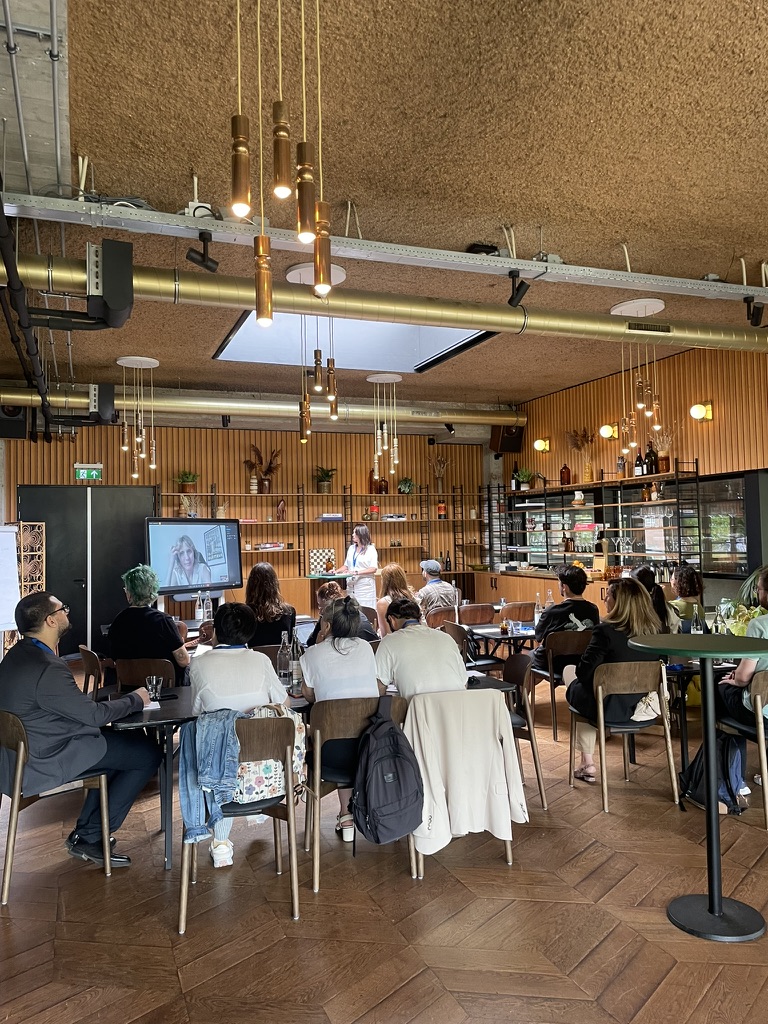
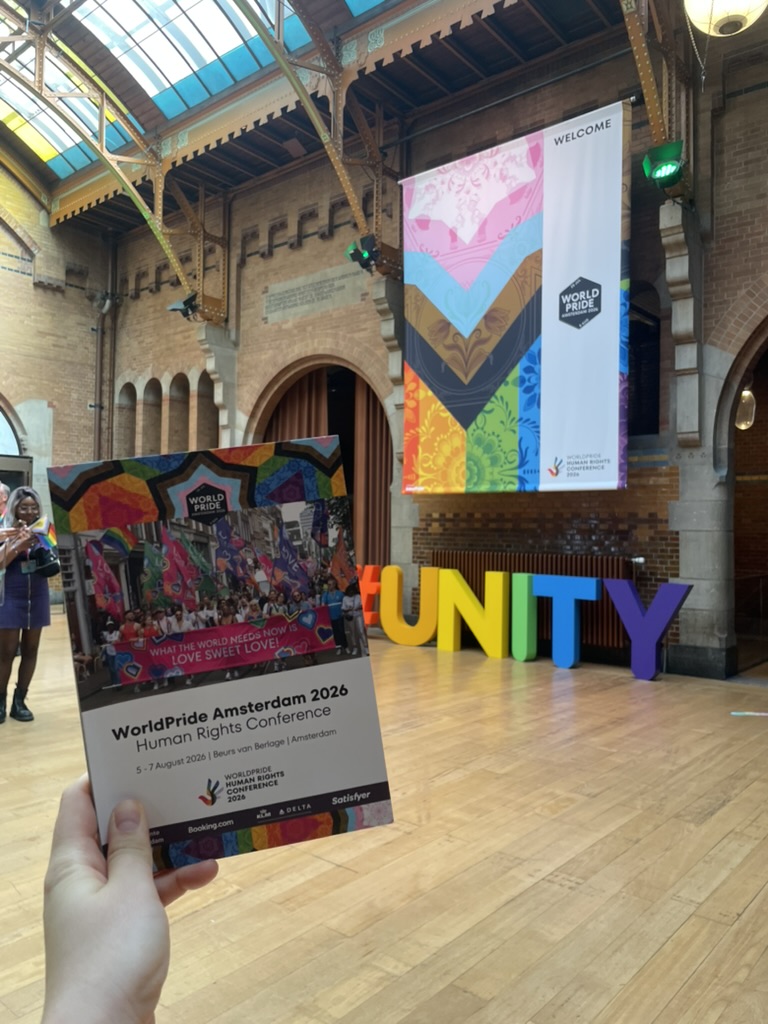
The study visit was organised by AFEW International together with its Georgian partners.
Alongside the Policy Dialogue, the programme included participation in WorldPride, exchanges with Dutch civil society organisations, international networking and peer learning. These activities gave participants an opportunity to build new professional connections, exchange practical approaches to advocacy and community support, and explore ways to strengthen organisational resilience and civic participation in a changing operating environment.
Putting Georgian civil society at the centre of the conversation
On 5 August, representatives of Georgian LGBTQI+ and human rights organisations met with European institutions, international organisations and civil society partners in Amsterdam for the High-Level Policy Dialogue “LGBTQI+ Inclusion in Policy-Making: Participation, Protection and European Cooperation.”
The dialogue placed the experience and priorities of Georgian civil society at the centre of the discussion. Participants shared first-hand perspectives on the situation in Georgia and discussed how LGBTQI+ communities and civil society organisations can remain meaningfully involved in democratic processes. The discussion focused on participation in policy-making, protection of human rights defenders and civil society organisations, access to justice, the shrinking civic space, and opportunities for continued European and international cooperation.
The meeting took place at a particularly challenging time for civil society in Georgia. Georgian participants spoke about increasing pressure on organisations and LGBTQI+ communities, growing uncertainty around access to funding, concerns about safety and access to justice, and the difficulties organisations face in maintaining essential community services.
One of the key messages from the discussion was that LGBTQI+ inclusion cannot be separated from broader questions of democratic participation and human rights. Participants stressed that meaningful participation requires more than consultation: communities need opportunities to contribute to discussions that affect them, help shape priorities and be recognised as partners in policy-making.
The dialogue also highlighted the importance of maintaining connections between Georgian civil society and European and international partners. At a time of increasing pressure on civic space, these channels provide opportunities for Georgian organisations to share their experience, raise concerns, exchange expertise and remain connected to wider European human rights and civil society networks.
Resilience in an increasingly challenging environment
For many Georgian civil society organisations, resilience has become a practical question of how to maintain teams, essential services and safe community spaces while continuing to operate in an increasingly difficult environment.
Georgian participants described how growing uncertainty has made long-term planning more difficult and requires organisations to continuously adapt. The discussion highlighted the importance of financial stability, flexible funding mechanisms and forms of support that can respond to changing circumstances, particularly for organisations working directly with vulnerable communities.
Maintaining essential community services was identified as a particular priority. Civil society organisations provide psychosocial and social support, HIV-related services, referrals and safe community spaces that may not always be accessible elsewhere. Ensuring continuity of these services is therefore important not only for the organisations themselves, but for the people and communities who rely on them.
Participants also stressed the importance of moving beyond a traditional donor-recipient relationship. Georgian civil society organisations bring substantial local knowledge, professional expertise and direct understanding of community needs. This expertise should inform the design of international programmes and longer-term support strategies, with Georgian organisations engaged as partners in shaping priorities and approaches.
Among the recommendations emerging from the dialogue were greater flexibility in funding, stronger support for organisational sustainability, and opportunities to develop and test approaches that reflect changing local realities.
Protection, access to justice and civic space
Access to justice and the protection of vulnerable communities were another important focus of the dialogue.
Georgian legal and community representatives discussed the challenges LGBTQI+ people and other vulnerable groups face when seeking protection and accessing justice. Participants raised concerns around confidentiality, safe reporting, trust in institutions, judicial independence and the protection of human rights defenders, particularly in the context of an increasingly restricted civic space.
Despite these challenges, participants described how Georgian human rights defenders and civil society organisations continue to support communities, document developments and use available national and international mechanisms to protect rights and seek accountability. The discussion highlighted the importance of continued attention to access to justice, judicial independence, safe and confidential reporting mechanisms, and effective protection for people at risk.
The dialogue also reflected how Georgian organisations are adapting their work to the changing environment. Participants shared examples of organisations developing new partnerships, creating smaller and safer spaces for community engagement, using culture and art to reach different audiences, and strengthening cooperation with civil society partners in neighbouring countries and across Europe.
International connections were repeatedly identified as particularly important. Beyond providing opportunities for advocacy, these relationships enable organisations to exchange expertise, maintain professional networks and remain connected to wider European and international civil society at a time when the space for independent civic engagement in Georgia is becoming increasingly constrained.
A week of learning, exchange and international cooperation
The 5 August Policy Dialogue formed part of a broader week-long programme of learning, exchange and international engagement in Amsterdam.
The Georgian delegation participated in the WorldPride Human Rights Conference, where participants engaged with representatives of governments, European institutions, UN agencies, international NGOs, researchers, activists and civil society organisations from different countries.
The programme also included a visit to COC Nederland for an exchange on LGBTQI+ advocacy, community mobilisation and cooperation with public institutions. Participants explored approaches to LGBTQI+ visibility and representation through the Pride Photo exhibition and joined the WorldPride March together with Workplace Pride.
These activities provided opportunities not only for international networking, but also for practical exchange and peer learning. Participants were able to present their organisations and work, discuss the situation in Georgia with international counterparts, learn from approaches used in other contexts and establish new professional connections.
Feedback from the Georgian participants highlighted both the professional and personal value of the programme. Participants described gaining new perspectives on community engagement, communication, inclusion and the creation of safer spaces for people experiencing discrimination or exclusion. They also identified ideas and approaches that could inform their future work with communities in Georgia.
Several participants particularly valued the opportunity to meet colleagues from different professional and national backgrounds, exchange experiences and build relationships beyond Georgia. One participant described the week as bringing “positive energy, new knowledge and inspiration,” while others emphasised the importance of the new connections and practical learning gained through the programme.
Taken together, the Policy Dialogue, study visits, conference participation and international exchanges strengthened professional networks and created new opportunities for peer learning, cooperation and continued engagement between Georgian civil society and European and international partners.
Continuing the dialogue
WorldPride Amsterdam provided an important international platform, but the value of the Georgian delegation’s visit went beyond participation in Pride itself.
The 5 August Policy Dialogue showed the importance of creating spaces where Georgian LGBTQI+ civil society representatives can speak directly about their experience, define their own priorities and engage with European and international partners on the issues affecting their communities.
A clear message from Georgian participants was that international solidarity is most meaningful when it leads to sustained engagement, meaningful participation, flexible forms of support and strong professional connections. In a rapidly changing environment, maintaining these connections is particularly important for ensuring that the knowledge and perspectives of Georgian civil society remain part of European and international discussions.
For AFEW International, the Amsterdam programme demonstrated the value of bringing Georgian civil society and international partners together for direct dialogue, practical exchange and relationship-building. The connections established during the week provide an important foundation for continued dialogue, knowledge exchange and international cooperation, and for ensuring that the voices and experience of Georgian civil society remain visible and heard.