

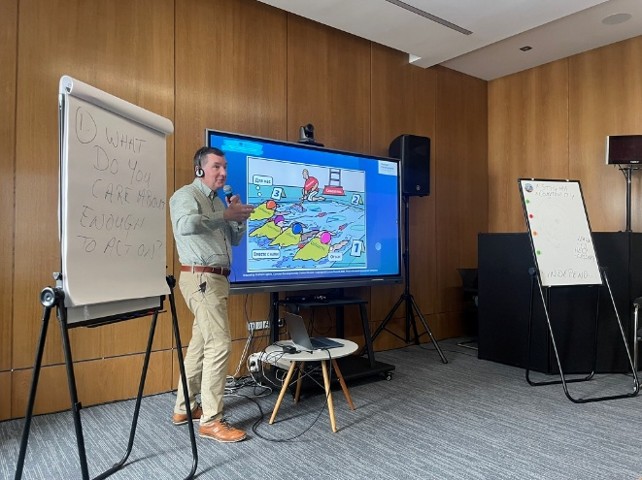
On 13–14 July 2026, AFEW International hosted a two-day Discover Asset-Based Community Development (ABCD) training in Tashkent, Uzbekistan. The training brought together civil society organisations working with women, youth, people living with HIV (PLHIV) and people affected by HIV to explore how communities can build on their own strengths, relationships, knowledge and resources to create meaningful and sustainable change.
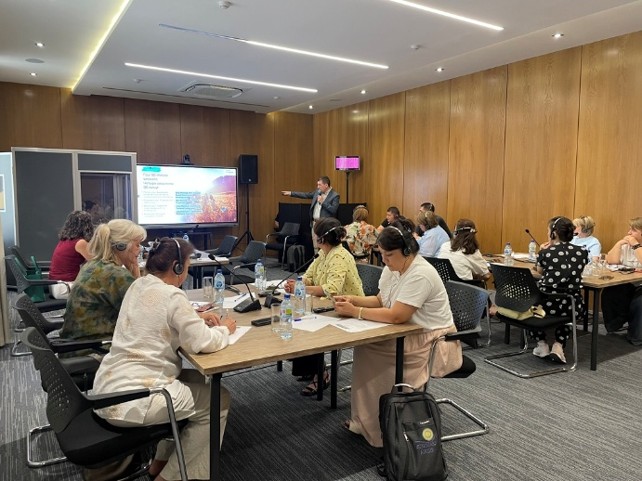
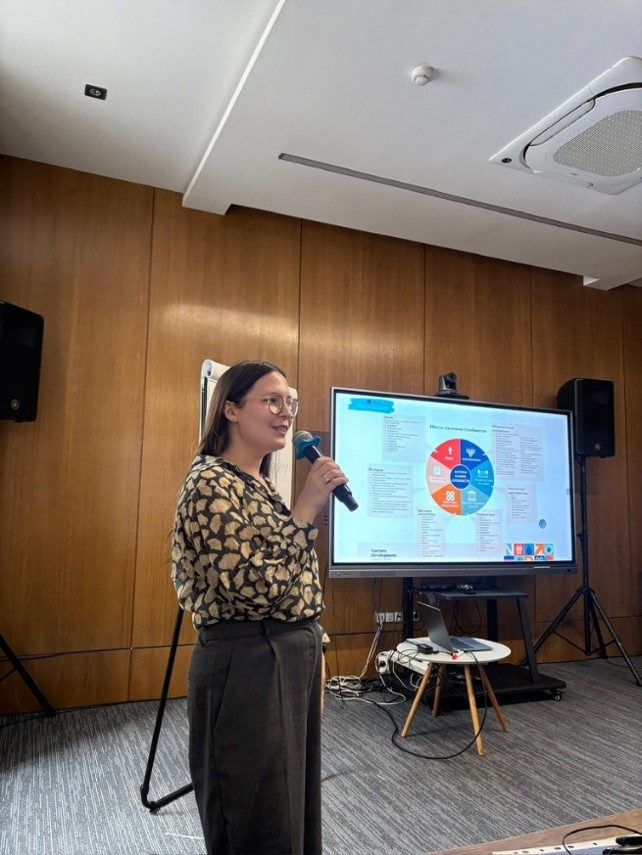
The training was organised within the framework of the EU-funded project “Empowering Voices for Inclusive Development: Strengthening Civil Society Organizations (CSOs) in Uzbekistan, focusing on women and youth.” Through the project, AFEW International and its partners are strengthening the capacities of 15 local CSOs in Fergana, Namangan, Samarkand and Tashkent, with the aim of increasing the inclusion and empowerment of women and youth and reducing stigma and discrimination against people living with and affected by HIV.
Why ABCD matters for civil society organisations in Uzbekistan
Women and young people living with or affected by HIV can face social exclusion, stigma and discrimination. At the same time, civil society organisations supporting these communities need effective ways to mobilise people, strengthen cooperation, advocate for their priorities and engage in policy dialogue. The project therefore uses ABCD as a practical approach for helping CSOs work with communities in ways that recognise people’s capacities and strengthen their ownership of change.
Rather than starting only with problems, needs and what is missing, ABCD asks what strengths, skills, relationships and resources already exist within a community. Challenges and inequalities are not ignored; the starting point changes. Communities are supported to identify their own assets and priorities and to mobilise these as a foundation for collective action, while external resources and professional support complement rather than replace local strengths.
This perspective is especially relevant to organisations working with vulnerable groups. A needs-based approach can sometimes unintentionally reinforce dependency on NGOs or external experts. ABCD encourages organisations to act as facilitators, connectors and enablers, helping community members recognise what they can contribute, strengthen relationships and take a more active role in decisions affecting their lives.
From training to practice
During the two days, participants worked with practical ABCD tools and reflected on how to use them in their organisations and communities. Exercises included the four contracting questions, circles of association and appreciative inquiry. Participants explored how these tools can help reveal existing support networks, identify individual and community capacities and shift attention from what is lacking to what is already possible.
The learning is intended to feed directly into the wider project. The 15 participating CSOs will apply ABCD in their work with communities, alongside trainings and workshops, mini-grants, stronger civil-society networking and policy dialogue with government. The project also addresses stigma and discrimination through the sensitisation of AIDS Center staff, educational work with teachers in cooperation with the Ministry of Education, and media awareness activities aimed at the wider public.
What participants took away
Feedback from participating CSOs showed how the training challenged familiar ways of working and generated practical ideas for their daily work. Several participants highlighted the value of looking at situations through the lens of opportunities rather than only problems, and of considering how NGO support can strengthen people’s ownership rather than create dependency.
“It is useful to look at situations through the lens of opportunities, not only problems that we should solve for someone else.”
“The circle of association was eye-opening: it revealed who beneficiaries are actually surrounded by.”
“Every community should increase the self-esteem of its members, formulate goals, identify assets and use them in a variety of ways.”
“Every person can reveal their strong sides and find what they can offer that is useful for society.”
Participants also said they planned to use circles of association and appreciative inquiry in practice, and to place greater emphasis on beneficiaries’ self-esteem and capacities. One reflection was that labelling something as a problem can itself contribute to stigma. Others noted that some ABCD methods were already present in their work unconsciously, and that the training gave them a clearer framework for using these approaches more intentionally.
Building stronger, more inclusive communities
For AFEW International, the training is one part of a broader effort to strengthen civil society organisations in Uzbekistan so that they can better support women, youth and communities affected by HIV. By combining capacity development with community-led approaches, networking, grants and policy dialogue, the project aims to help CSOs create conditions in which people are recognised not only through their needs or vulnerabilities, but also through their knowledge, relationships and abilities.
The training was facilitated by Cormac Russell, an international practitioner of Asset-Based Community Development and Founding Director of Nurture Development. His role in the training was to introduce ABCD principles and support participants in exploring how they could be adapted to their own organisational and community contexts.
This article was produced within the framework of the EU-funded project “Empowering Voices for Inclusive Development”. Its contents are the sole responsibility of AFEW International and do not necessarily reflect the views of the European Union.